20/10/26October 20, 2026·Personal·5 min read
Money is not real.
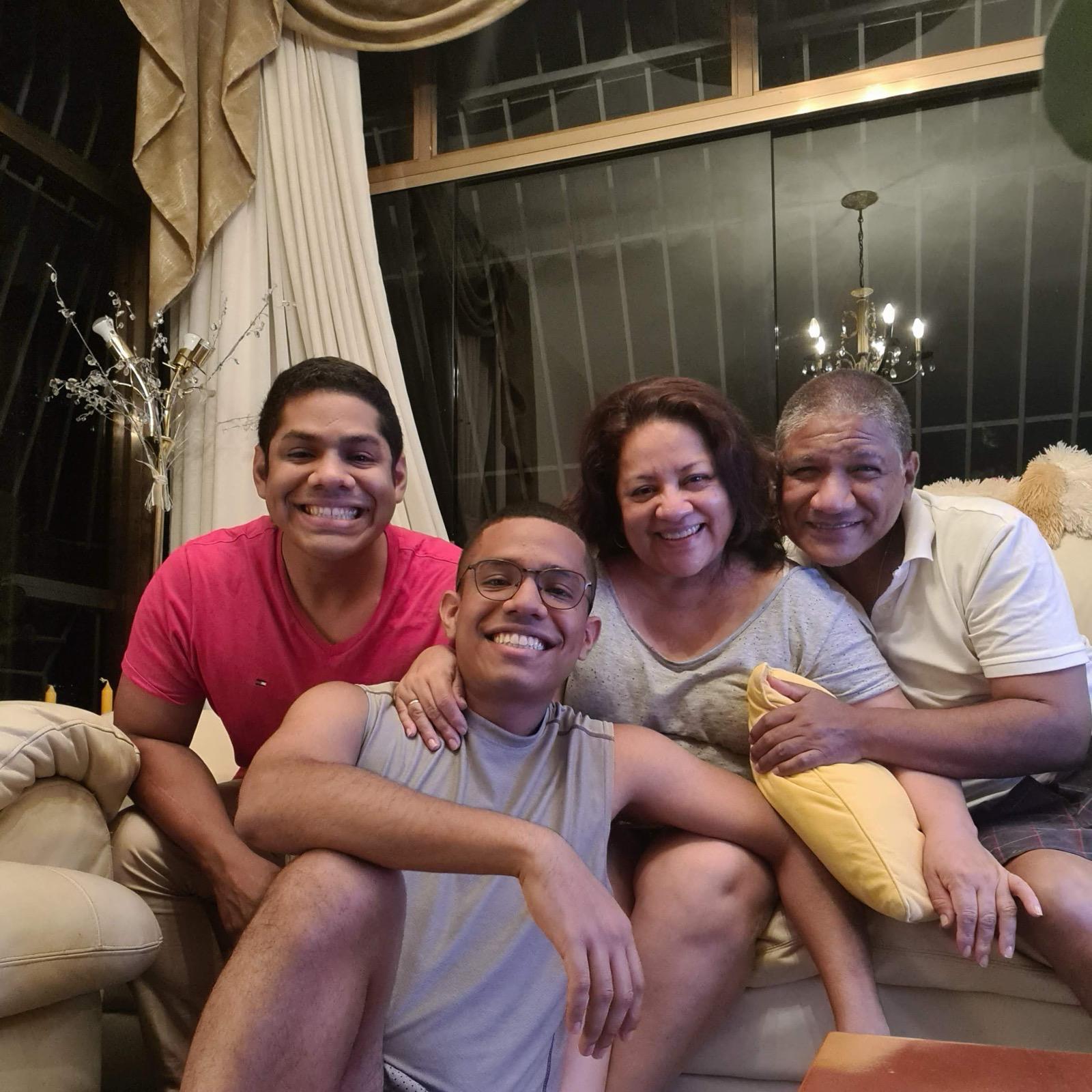
I am eight years old, sitting on the edge of our living room couch.
On the table, stacks of cash. Thick ones. My father counts them out loud, moving his fingers from one bill to the next. My mother pays close attention and writes down every single number my father says in a notebook or computer. This procedure was repeated every single week, for years.
The more interesting thing is that they really liked to keep cash in the drawers. They also hide it somewhere in the living room. Physical money, always visible and close.
I did not understand it then.
I think I do now.
I.
My parents are Peruvian. They grew up in large, economically precarious families in a country that was (in the seventies and eighties) politically unstable, violent, and difficult to navigate. They left for Venezuela looking for something that Peru could not give them: a fresh start and potential economic stability.
They built a business from scratch. A cleaning and personal hygiene products distribution company.
And it worked.
But the framework they built it on was survival. The goal was never to grow wealth. The goal was to not go back to where they came from. They wanted to have more control over their time (at least relative to their jobs at the moment) and live comfortably in the process.
Venezuela, years later, gave them a second crisis to survive. Many private companies started to shrink, theirs included.
The cycle repeated. Now in a different country and decade. The fear persisted.
II.
When you grow up watching money as a physical object (something you touch, count, and keep close) you develop a specific relationship with it.
Your brain starts to reinforce that money equals safety. Money held in your hands cannot disappear. It actually feels real.
The problem is that this relationship, built on fear of loss, made it harder for them to grow that money over time. The very protection mechanism blocked the possibility of a more stable future. They never invested long-term. They have not yet been able to build the retirement they deserve.
III.
Five months ago, I stopped working at my last company.
I had projects I had been postponing for years. Fortunately, I had funds to sustain myself for months. So, I made a decision: to use this window to invest more time and attention in what I wanted to build.
My mother’s response was predictable:
“First, I would find a stable job that guarantees a monthly income. Then I would think about my own projects.”
I know that her intention is always to protect me.
It comes from a woman who learned, from experience, that income is not always guaranteed. That the environment is generally uncertain. Things can fall apart and survival is not a given.
There were moments, especially in the first month, where I felt a version of that same anxiety. A brief, manageable, but present sensation.
The difference is that I did not let it drive my daily decision-making. I started building consistently with or without fear across long days and weeks.
IV.
We do not always choose (at least consciously) the frameworks we learn from our parents while growing up.
For a long time, I had their relationship with money unconsciously. I felt anxious about money scarcity. Changing that took years. And it was not a matter of reading the right book or just living in a new place.
It was about acting against the inherited instinct, repeatedly, until a new habit formed.
I began to see money as a tool: digital, abstract, and contextual. A resource that moves in exchange for value.
Yuval Noah Harari calls money an intersubjective reality, a concept he develops across two books: Sapiens and Homo Deus. Money is not objective, like a stone or a river. It is not subjective, like a feeling or a dream. It exists in the shared space between human minds that collectively agree to believe in it. Cash has value because you and me believe it does.
This changed how I read the scene on our living room couch.
When Venezuela started to collapse (when the bolivar lost its value across time) the collective agreement broke. The shared belief dissolved. As a result, if the value of money depends entirely on that shared belief holding, then keeping cash in a drawer was understandable. It was one of many reactions to live through a moment that repeated twice in their lifetime. They were being precise about the only thing they feel they could fully control. Cash in hand was the clearest form of certainty available.
I have never told my parents this: it is natural to worry about survival. We are human beings. But money is a human construct. It does not exist in the way we feel it does. And changing how we perceive it takes time, and if you are willing to do it, it can help you detach from the fear, manage your emotions better, and make clearer decisions.
They will probably agree with me, but this will come from their rational minds. The real question is: what does it take to change our core beliefs in the long run?
That is what I am trying to do. For myself, and eventually, for other people.
If this resonates, you can subscribe below to read the next article when it comes out.
I am currently building a software product to help individuals make informed investing decisions easier and faster than ever before. If you want to know more, sign up to the waitlist.
Read next
- JournalBreaking the cycle of scarcityI've realized that the best way to reduce anxiety about the unknown (especially regarding financial security) is through example.Read→
- BlogTwenty BolívaresTwenty bolívares bought me lunch in Caracas in 2017. By December, they bought nothing. The semester I learned how quickly money can lose...Read→