
15/10/26October 15, 2026·Professional·5 min read
Fifteen conversations. One product. A lot to fix.
Last month I started meeting users.
An hour and a half on average with each one, a screen, a notebook, and a real person using Amaru for the first time.
Fifteen sessions so far. Here is what happened.
I. The panel that said too much
My first hypothesis about Amaru was that more information meant more value.
I was wrong.
The feedback was expressed differently depending on the person. In essence, it pointed to the same place: “there’s a lot going on here.” At first I read it as a compliment. I thought more to explore meant more reason to come back. Shortly after, I understood what they really meant.
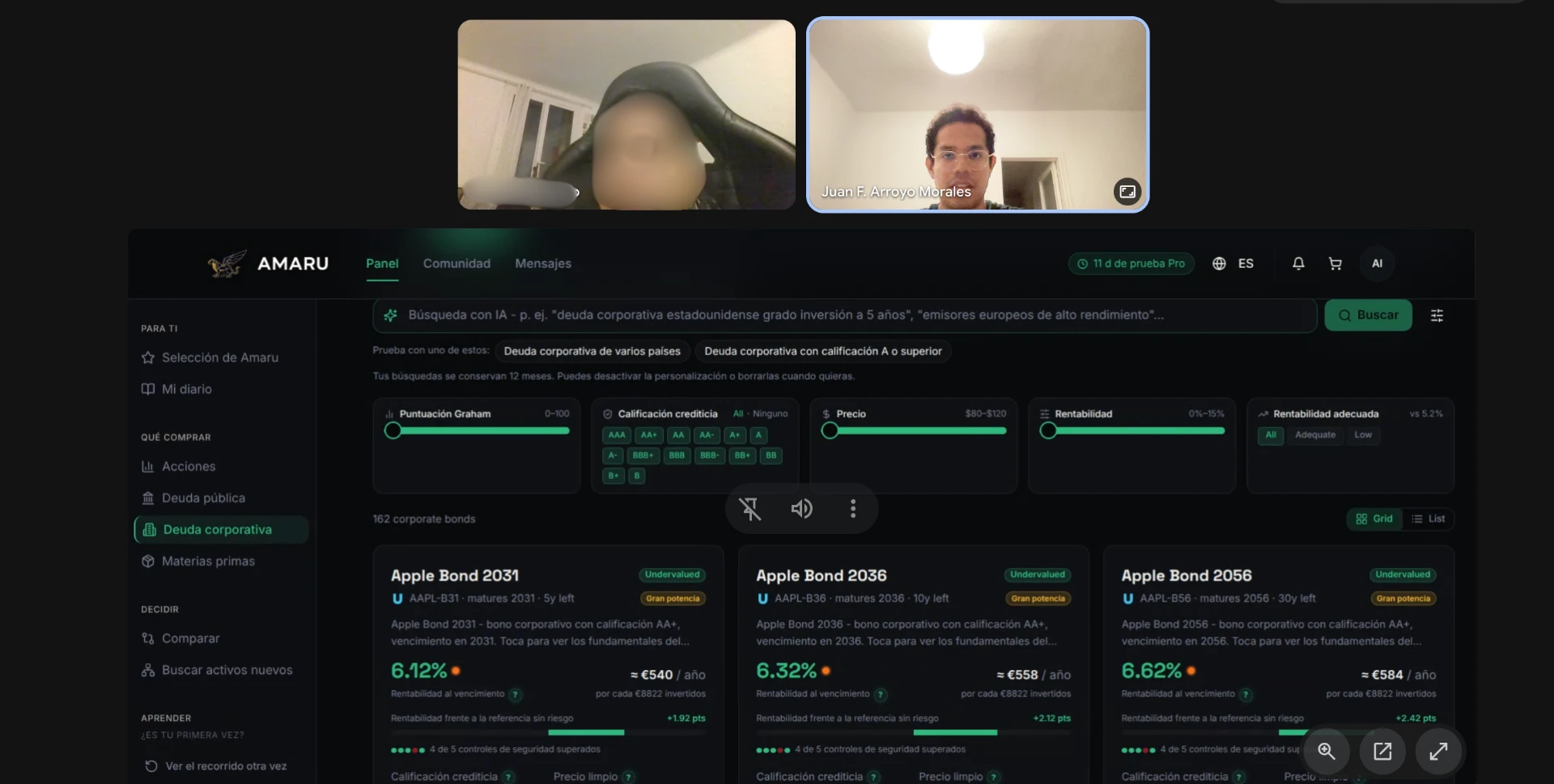
The main panel, where users have a catalog of stocks, bonds and commodities to research, had too many buttons, too many signals, too many things asking for attention at the same time. For someone who has never invested before, this kind of panel doesn’t empower. It increases friction.
On my end, I had spent weeks reducing the complexity of the data. From the beginning, my goal was to reduce the “information overload” that limits beginner users the most. What I had forgotten was that how you present information is just as important as the information itself.
In the last few days, I decided to rebuild this panel for all users.
II. The features that haven’t worked
The investment simulator failed. More than once.
The idea: users invest fictional money, track how their decisions evolve, and eventually compete with friends to see who has better investment instincts. A reason to come back, and probably a reason to stay.
In practice, errors in how data syncs between the API and Amaru’s database made it impossible to run properly. One user experienced this in real time, during our session. At first they were patient, but I could see the exact moment their curiosity started to fade.
That is the real cost of a broken feature. The user won’t always get frustrated, but they will lose momentum. And that, without doubt, has long-term consequences.
The AI search has also failed consistently. The reason: Vector Search issues. The Amaru Agent, the voice that lets users converse with the investment logic of Graham, Dalio, Buffett and six other legendary investors, still needs attention that, unfortunately, I haven’t been able to give it yet.
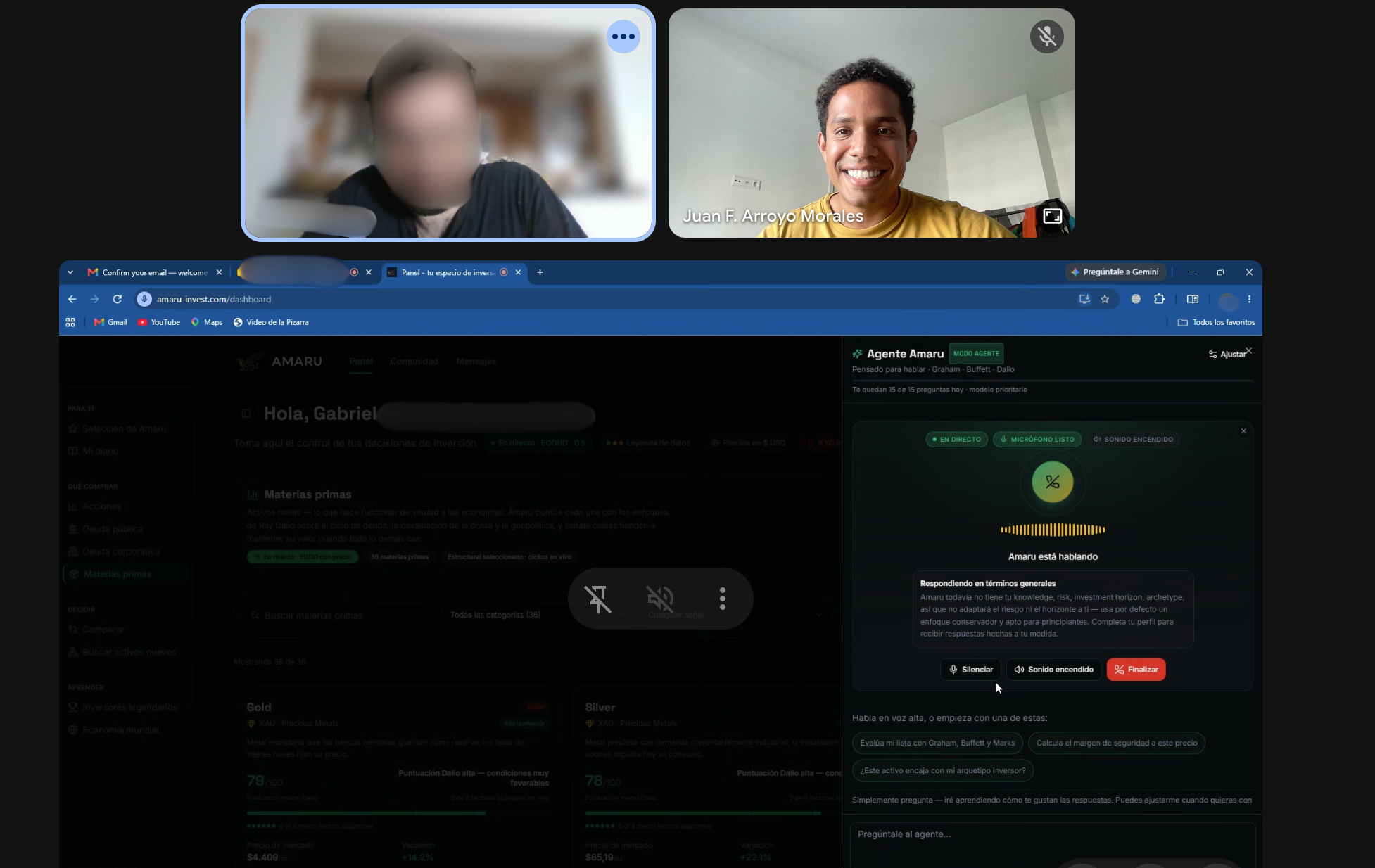
The list of what needs fixing is long. Fortunately, the fact that the list is specific is very good news.
III. What beginners taught me
Something I didn’t expect: users with no prior investment experience gave me the most useful feedback.
My hypothesis is that, having no prior framework to filter what they were seeing, they saw the product as it actually is. Without comparing it to something they already know.
The simplest questions exposed the deepest assumptions, and even the most basic ones.
A few days ago, a family member sent me a voice note asking whether Amaru could eventually help with any important financial decision, not just stock market related, but any choice about where to put money or time. I hadn’t thought about Amaru that way before.
Now I can’t stop thinking about it.
IV. The Dutch guy
This week someone I wasn’t expecting reached out.
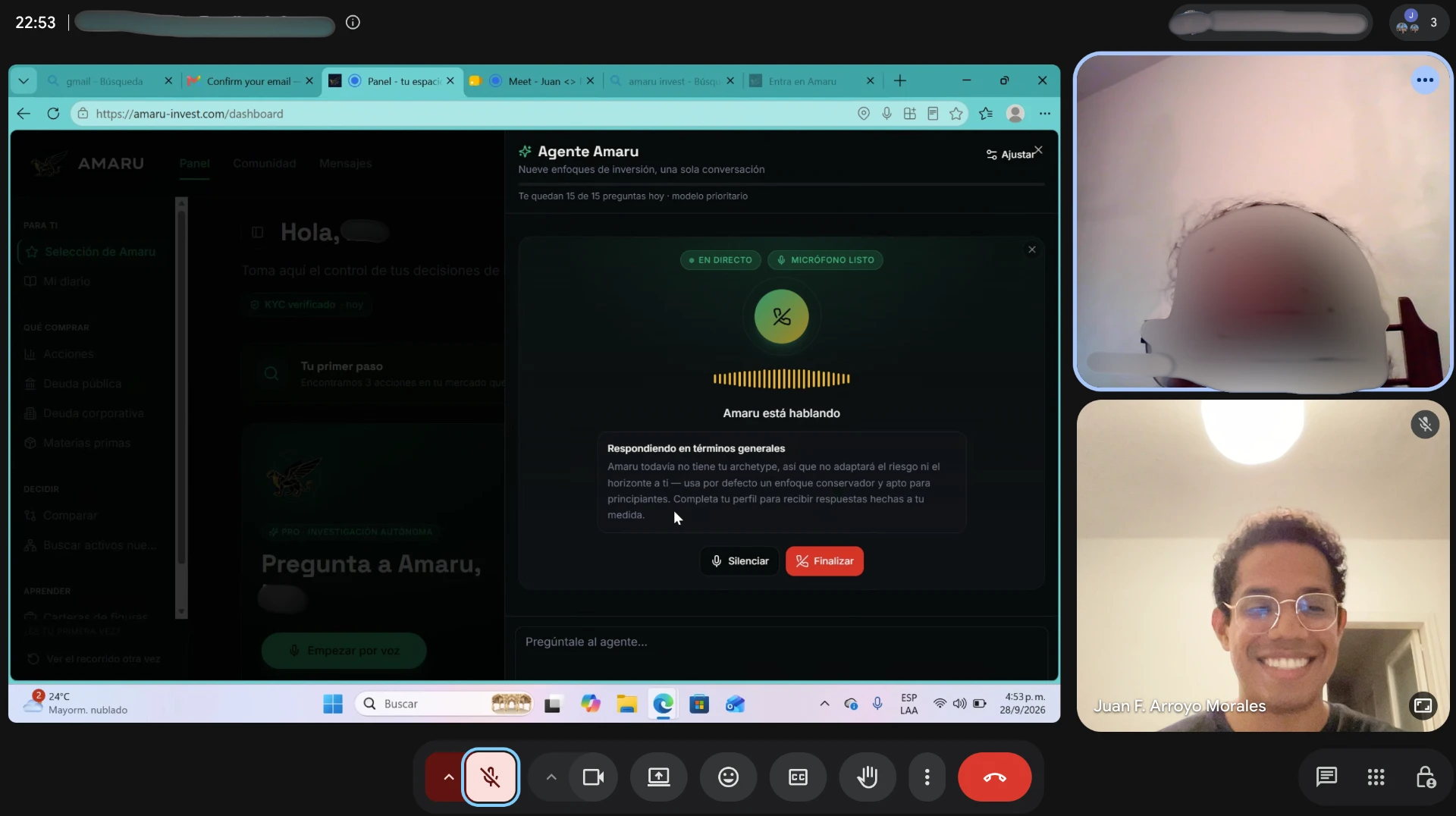
A Dutch guy found my LinkedIn post where I introduced Amaru’s beta version. He took the initiative and booked a call directly on my calendar. He’s a value investing enthusiast with years of experience, and has even worked with companies in the space.
He arrived with opinions. Gave direct, clear, and useful feedback. Left with an open door, since he is building his own platform to help people invest with better judgment.

That conversation reminded me why I do this publicly. The right post reaches the person you didn’t necessarily know you needed. You never know with complete certainty who is reading you.
V. What I learned about myself
Strangely, I don’t feel attacked when someone criticizes what I build.
It sounds obvious, but it isn’t. Many builders confuse their product with their identity. If someone strongly criticizes my work, the response of a younger Juan would have been to push back. To confuse what I created with who I am and what I’m worth.
I feel nothing of the sort.
I firmly believe that distance is what allows me to genuinely hear what people are saying, instead of adopting a defensive stance toward what I already built.
What comes next
I want to reach 50 user sessions before the official launch.
Between now and then: fix the simulator, refine the Agent, simplify every flow, signal and button to what is strictly functional and necessary. Everyone who participates will have access to three months free, if you find value in this, you should have it first.
The parallel path to consolidating the product is distribution, distribution, and more distribution. More visibility and building digital authority on these topics. I wonder what unexpected encounters lie ahead. I’m certain the Dutch guy this week will be one of many.
This is just the beginning.
Read next
- BlogThe value of live feedback on product developmentLive demos with real users challenged what I thought a "beginner" experience looked like, and reinforced why I built Amaru Invest in the first place.Read→
- Readings · Principles · Ray DalioPrinciples, Ray DalioToday the book focuses, as a first point, on identifying problems and not tolerating them; and then on discovering the root causes of those...Read→