08/10/26October 8, 2026·Professional·8 min read
In 2021 I had an idea I could not build. In 2026 I shipped it in three months.
In 2021, I had an idea I could not build.
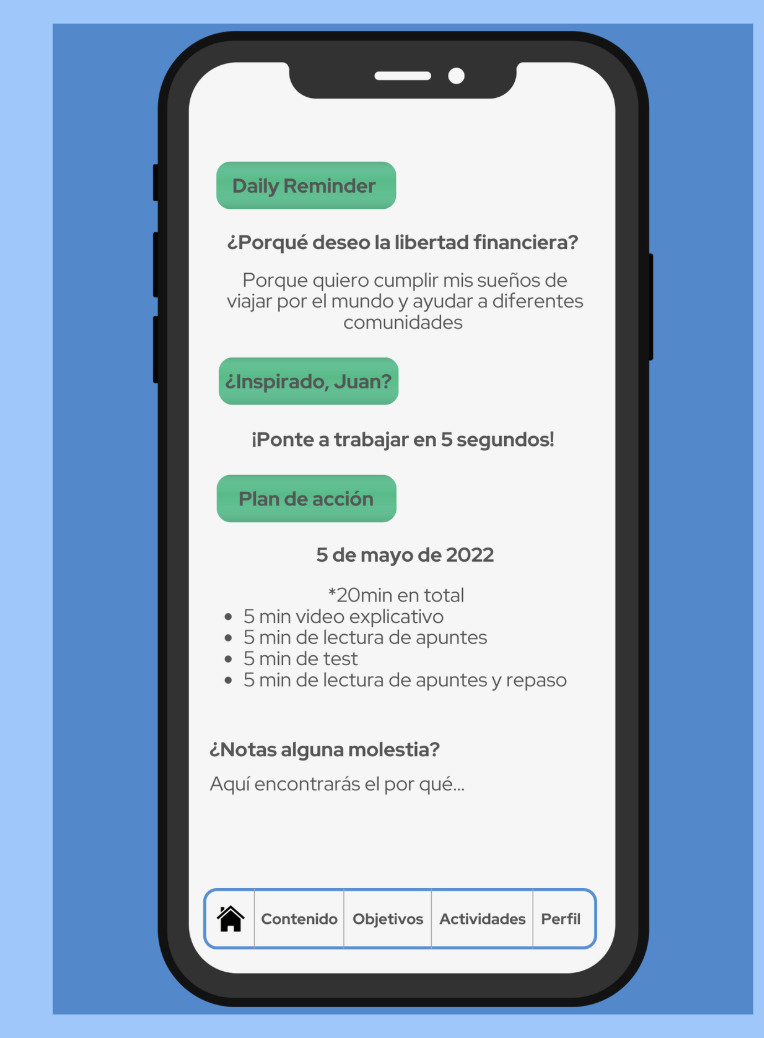
It was called InvestInc. The goal was to democratize financial education for non-specialists: help people save money and then invest in their favorite companies, with every step of the workflow backed by neuroscience and behavioral psychology. I was studying at UC3M in Madrid during my Erasmus exchange and the idea became the final project of my Design Thinking course.
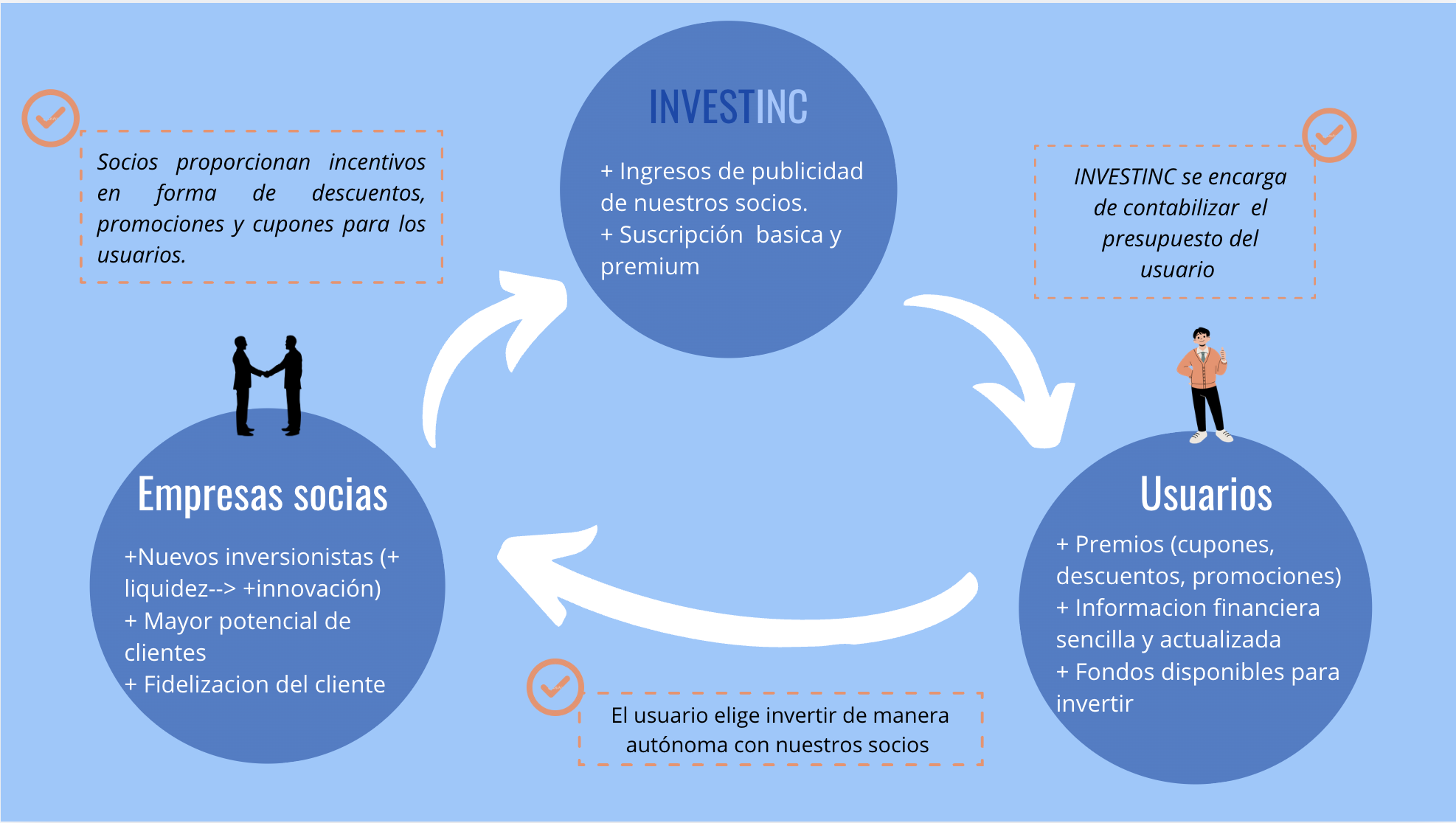
I spent a month and a half doing research. Surveys with university students about how they perceived financial education, whether they had found alternatives outside the classroom. I collected hours of audio, rich and detailed. But processing all of it slowed everything down. The next step, building mockups to show to real people, felt impossible. At one point I even asked a friend who had already started her own venture to make them in Canva for me. My mind did not see the tools available at the time (no matter how difficult they were to operate) as opportunities to learn. It saw them only as barriers to start.
I participated in the Explorer Programme, sponsored by Santander Bank and UC3M. Some of my colleagues had genuinely interesting ideas. But many of them dropped out over the months, prioritizing their studies, or simply unable to cross the gap between ideation and something tangible. I understood them completely.

In every conversation I had, people said my idea made sense. But without a real product to touch, that feedback meant very little. People were reacting to what I described, my speech, but not necessarily something I built.
InvestInc never became a product. Just mockups.
I. Five years later
Tools like Lovable, Cursor, and Replit have changed the rules completely. Everyone with an idea can now build websites, apps, and much more. The technical barrier has collapsed. The challenge now is different: usability, whether people find your creation valuable, and how to find your first users.
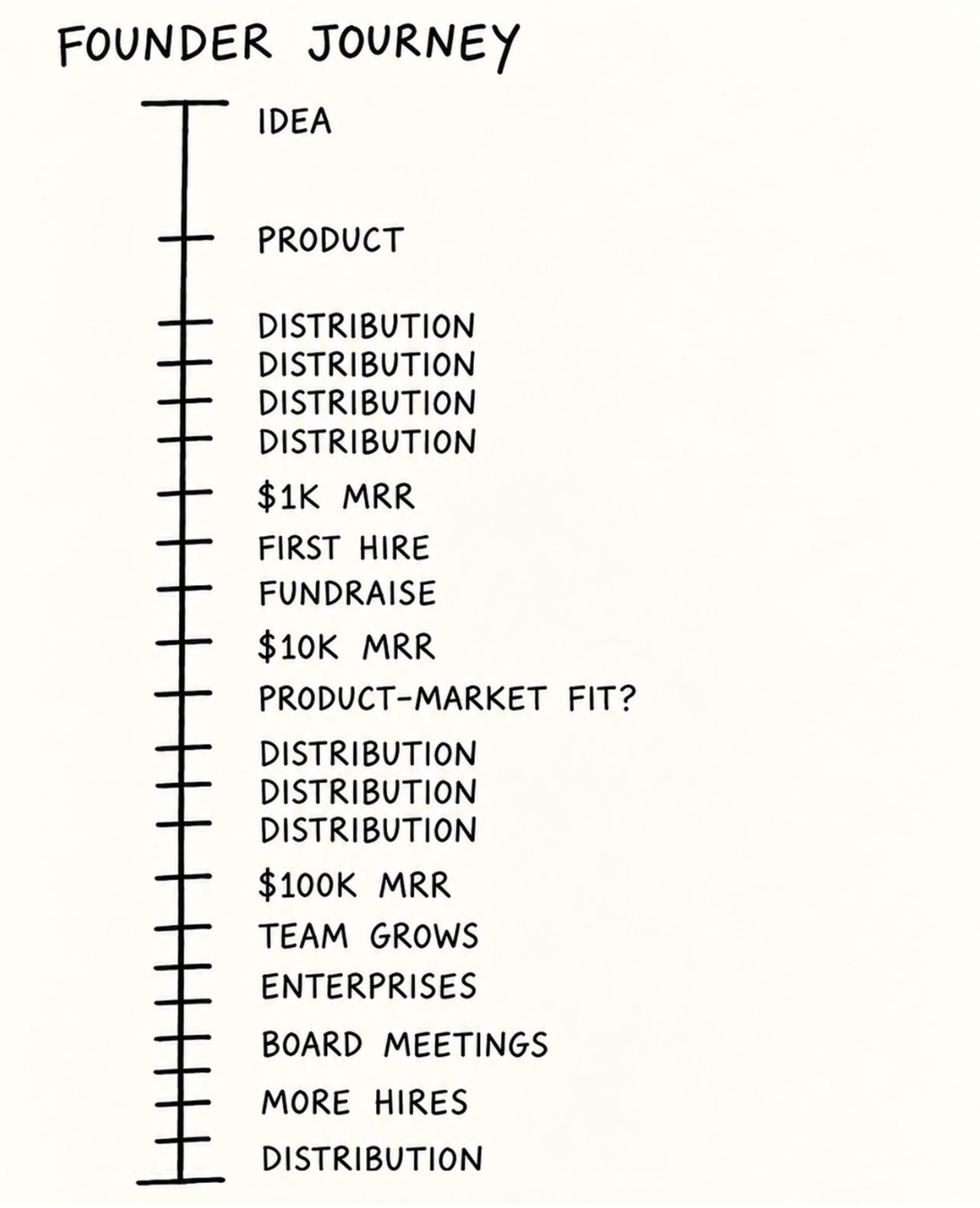
Anton Osika, the founder of Lovable, recently shared a roadmap for any founder in this new era. First, you have an idea. Then you transmute your thoughts into a product. Then you focus on distribution, distribution, and more distribution.
In March 2026, the idea for Amaru Invest came to me during a meditation session before leaving for work. I did not write it down. I just held it. The need was clear: a platform where I could apply the frameworks of the best investors in history (Graham, Dalio, Buffett) to real assets in real time. I had read all of them during my university years but had never found a product that connected their thinking to live market data in a single place.
The personal origin mattered too. My parents built their own company in Venezuela over decades of hard work. They had economic success. But their savings never worked for them: investing always felt too difficult, too opaque, too risky. That gap between having capital and knowing how to invest it independently was the problem Amaru Invest was built to solve.
I discovered Lovable because I had been following the founder of Sana Labs, a company applying AI agents to corporate workflows and upskilling. When the founder of Lovable emerged from that company and shared what he was building, I took note. A couple of months later I decided to try it. The fluidity of the platform, the quality of the output from my prompts, the feedback loop it created: I felt immediately empowered to keep going. I started paying for the subscription as the work intensified, a signal to myself that something real was happening.
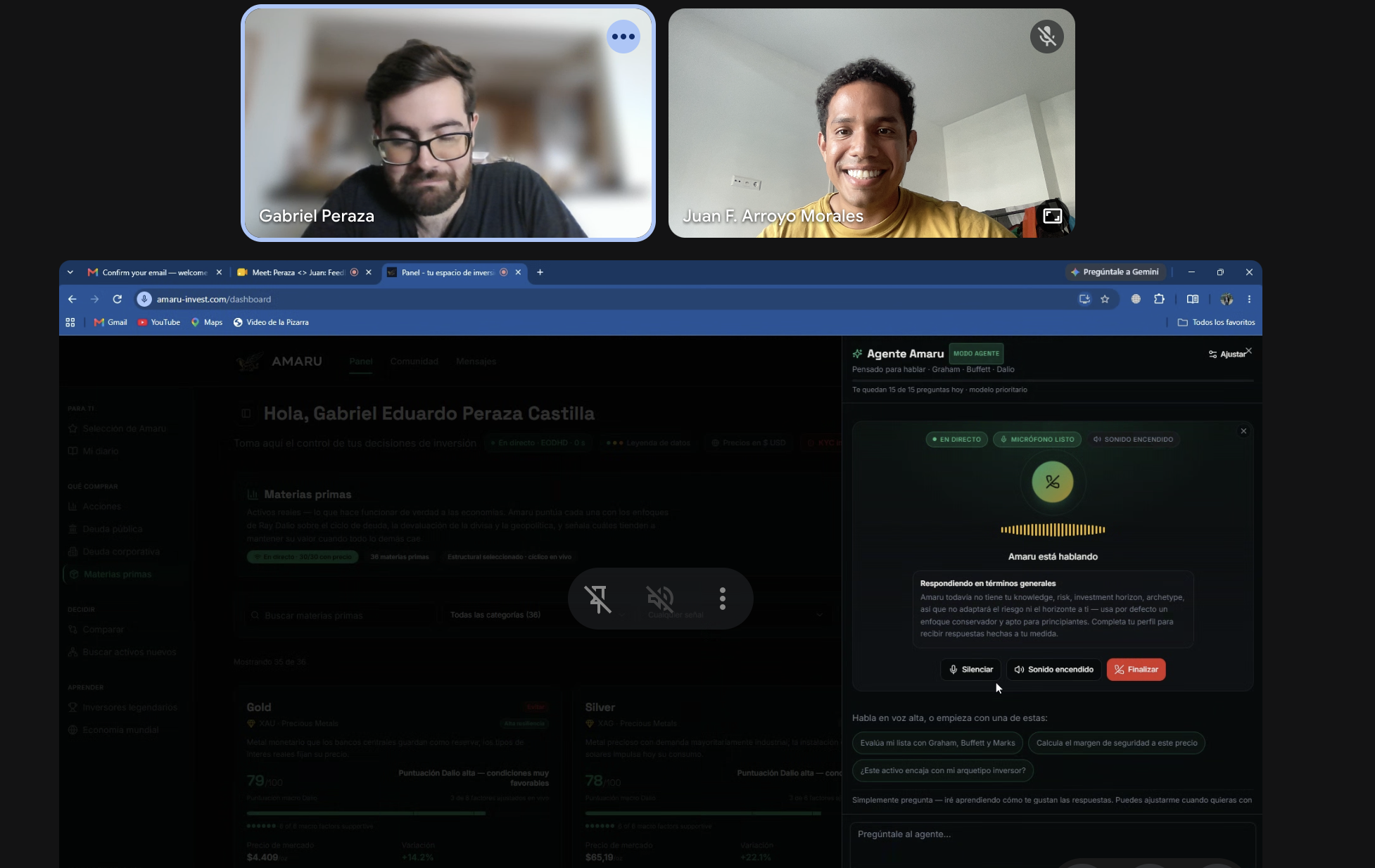
In the last three months I dedicated 80% of my time, effort, and attention to the product. Recently I have been running demos with founding users to extract feedback and improve consistently through feature iterations and design changes. Now that the product is functional and valuable enough, promotion and visibility must be prioritized.
II. What building actually cost
In the first stage, there are bottlenecks every determined builder will encounter. In my case, three stood out.
The most persistent was data accuracy. Running multiple APIs in parallel and ensuring that quality tests and daily updates work consistently is an enormous challenge for someone without a technical background. There were days when I genuinely did not know how to move forward. Using Claude and ChatGPT as thinking partners to work through those problems changed everything: the main goal was to understand what was breaking and why.
The second was workflow redundancy. Because the entire coding layer is generated via natural language, it is easy to accumulate code redundancies without realizing it. I had to review these manually and consistently.
The third was security. Cybersecurity and data protection are non-negotiable if you want users to trust your product. I have been actively learning about it while building.
Despite all of this, building with Lovable slashed my total development time while teaching me things I could not have learned any other way.
But there was something else that mattered more than the tools: the habits I had built in the years between InvestInc and Amaru Invest. Meditating every morning. Exercising consistently. Writing in my journal. In 2021, I did not have those systems in place. In 2026, I did. When a technical problem appeared, my baseline mental state was calmer. I managed my expectations better. I did not give in to frustration as quickly.
The other fuel was watching real users explore the platform for the first time.
My brother, who lives in Venezuela and had never invested in the stock market, was one of the first people to explore Amaru Invest. He told me the idea was genuinely useful for people who had never invested before, people held back by fear, difficulty, and opacity. What struck me most was not what he said. It was what he did. He went back to explore every section again. He played with Amaru Agent. He looked up companies he recognized and checked their performance over time. He was curious.
My parents could not invest their savings for decades. My brother could not either. Amaru Invest exists for both of them, and for everyone who has been told, implicitly or explicitly, that investing is not for people like them.
III. The next challenge
Building the product was stage one. Now comes the harder part.
Finding your first users is a completely different problem from building something they would use. The first thing I tested was publishing on LinkedIn and running demos with people who showed interest organically. What I learned quickly is that the story matters as much as the product: why you built it, whose problem you are solving, what the experience actually feels like. Now, more than ever, people are not looking for cool features, but a brand they are able to relate to.
Marketing and PR come next (digitally first, then in person). Attending events where you can meet not only potential users but partners and investors. I am right now in this stage, learning as I go, documenting the experience to revisit it later and find what I would do differently.
If you are curious to start your own project, the only real limit is mental. Never in history has building something from scratch been so accessible. AI has removed those barriers entirely or partially. But you also need the confidence to believe that your idea is worth pursuing. You need to feel like you belong in the room. You need to see technology as something you can shape, not just something shaped by others.
IV. What I would tell the Juan of 2021
Focus on your personal systems first. Build a level of self-confidence so solid that in moments of frustration, pressure, or difficulty, no obstacle can stop you completely. That foundation will increase your probability of finding ways to transmute abstract ideas into real ones consistently, with the tools that will eventually appear, like Lovable, or others you cannot yet imagine.
Your entrepreneurial spirit is real. Keep cultivating it before expanding that energy into what you create.
The difference between InvestInc and Amaru Invest was not the idea. It was the person building.
Sometimes the person is built before the product.
Read next
- BlogFifteen conversations. One product. A lot to fix.Fifteen sessions with people using Amaru for the first time revealed what needs fixing, what beginners see, and why building in public matters.Read→
- Notebook · EntrepreneurshipThe company is an extension of the personCompanies are only extensions of the people that make them up: their values, convictions, goals, every micro decision, every repeated habit, every desire.Read→