27/10/26October 27, 2026·Personal·9 min read
The Fragmented Reality
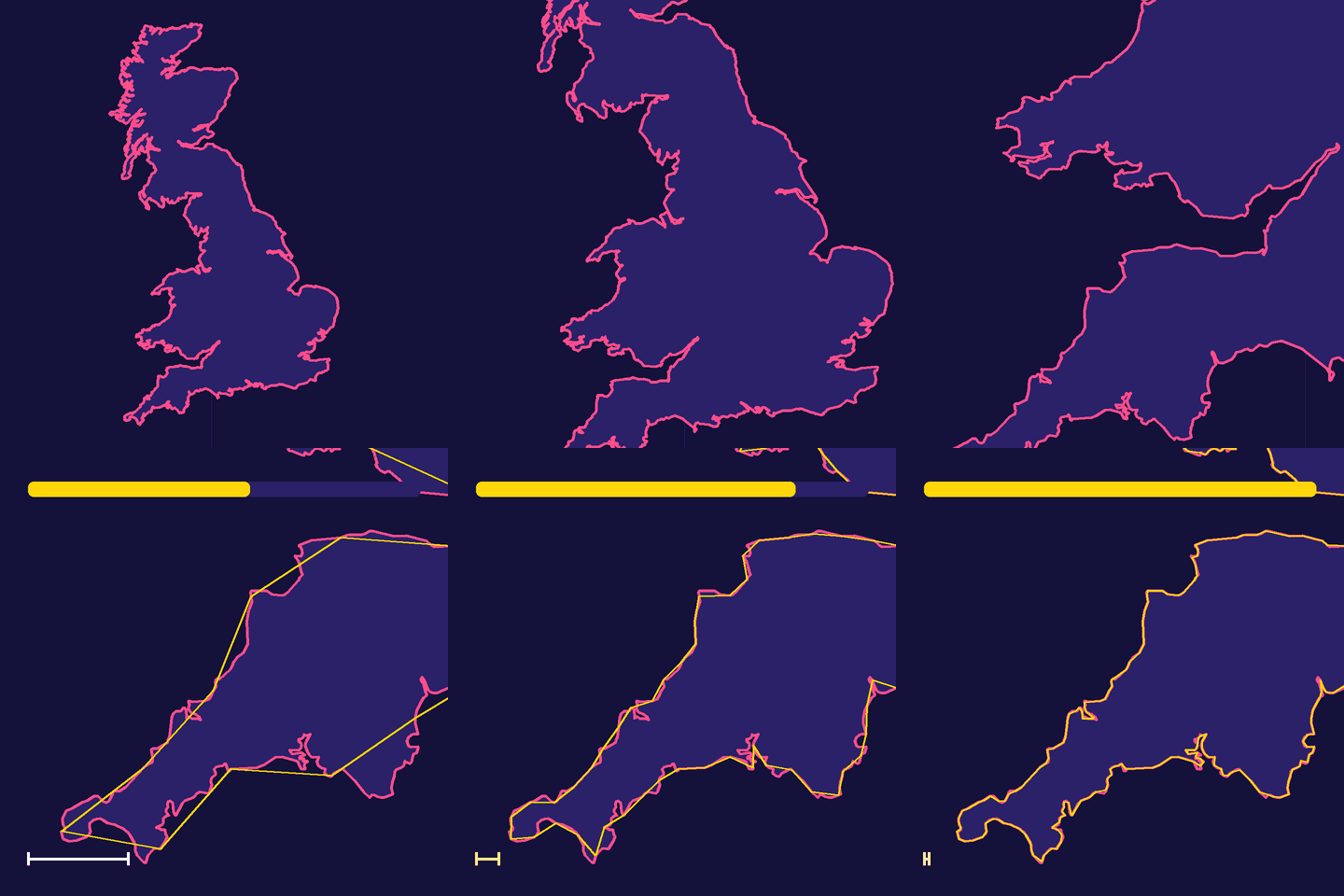
In 1967, Benoît Mandelbrot published a paper with a question that seemed absurd: How long is the coastline of Britain?
The answer, he showed, depended on the size of your measuring instrument.
With a ruler of a hundred kilometres, you got one figure. With one of ten, a larger one. With one of a kilometre, larger still. As you reduced the scale of measurement, the coastline grew longer. The reason: nature does not follow the straight lines of Euclid. It follows a different geometry, one in which the pattern repeats, recursively, at whatever scale you choose to observe.
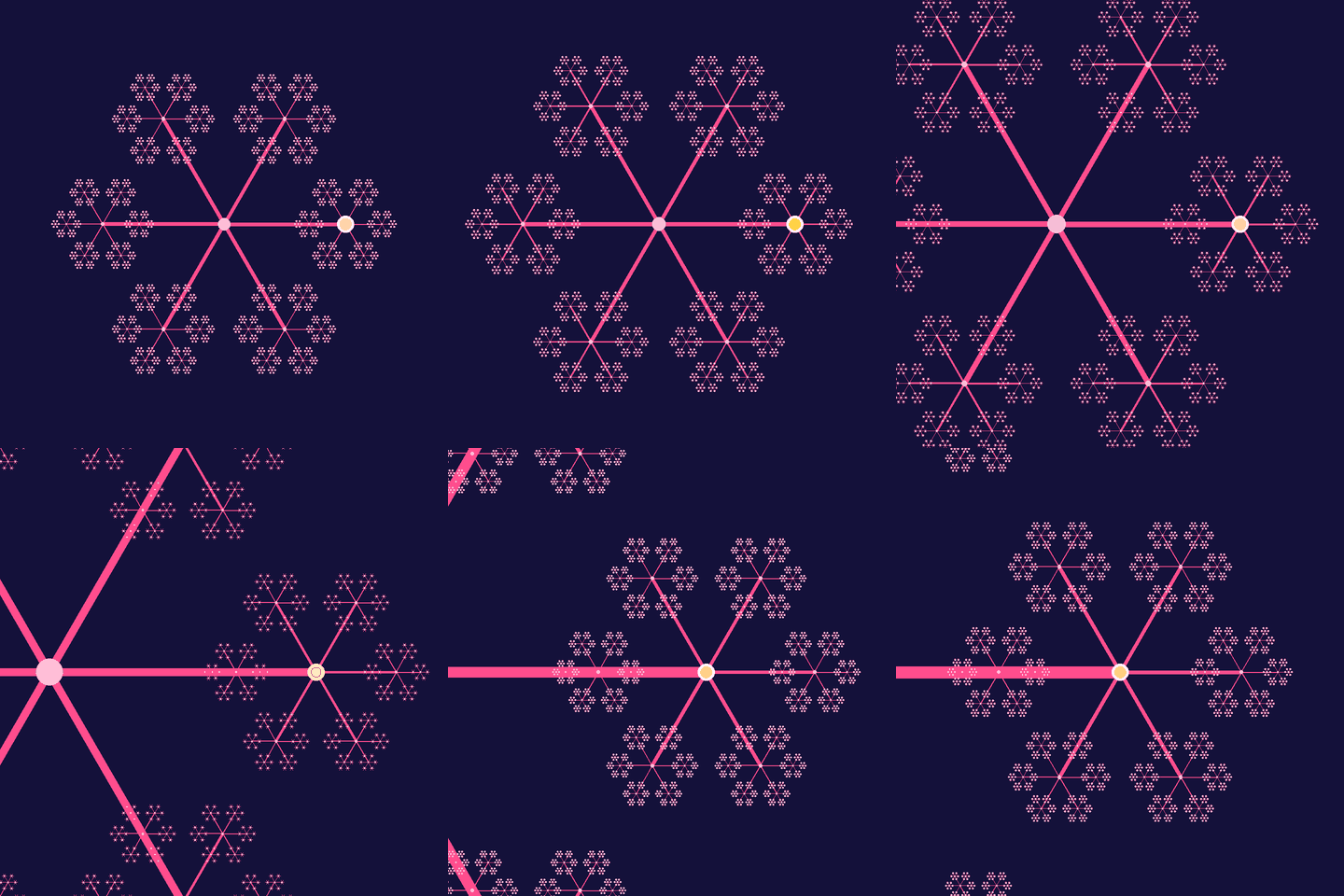
A snowflake is another clear example. Take the full shape: six symmetric arms branching from the centre. Now zoom into one of those arms. You will find six symmetric arms branching from a smaller centre. Do it again. And again. The pattern reproduces. The part is indistinguishable from the whole except in size. Mandelbrot called this self-similarity, and built from it an entirely new framework: the fractal geometry of nature.
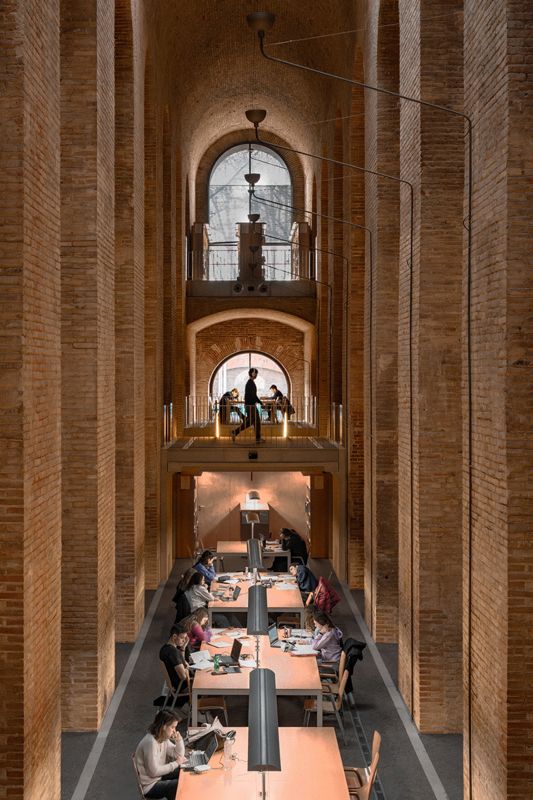
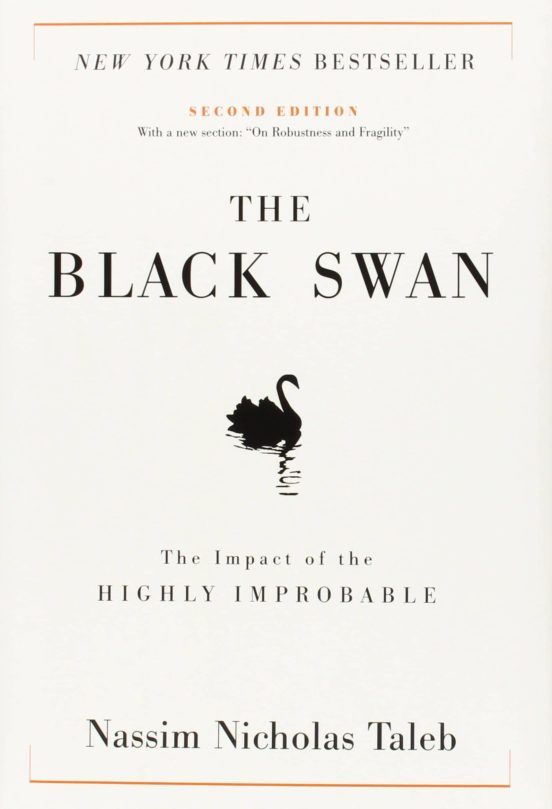
Nassim Taleb discovered it in the nineties and it completely changed the way he understood financial markets. I discovered it at the Dipòsit de les Aigües in Barcelona, reading Taleb, while studying econometrics at UPF. What changed was the way I interpret and perceive human structures.
If the pattern repeats from branch to tree, from snowflake to storm, why not from the individual to the organisation they build?
The Transition
It was 2021. I had spent twelve hours on a bus from Toulouse to Madrid, staring out the window at nothing in particular.
What I felt at some point during that journey was something close to peace, and that unsettled me. I was leaving behind a city I had experienced as demanding and foreign, a place where I could not see myself making progress. I was heading toward another where there was, at least, the hope that things would be different.
It took me months to understand that geography was irrelevant.
My way of thinking had been roughly the same through each of the migrations I had lived until that point: from Venezuela to Peru, from Peru to France. Over time, I had swept under the rug everything I did not want to process, convinced that a new context would resolve what I had not been willing to face internally. The habits I wanted to build had been in my mind since 2018, when I first arrived in Toulouse. But I was so focused on school that I ended up neglecting myself. The 2020 pandemic was the moment that accumulation became unsustainable. Years of unprocessed emotions, avoided decisions, and the deep habit of looking outward to explain what was going wrong.
On that bus, I finally accepted that this time would be different. I did not know exactly how. But I was certain I wanted to move in another direction, and to do whatever it took to sustain that over time.
Learning to Face and Accept
The first idea I truly internalised is this: no one outside you is responsible for who you are or where you are.
Not your parents. Not your country of origin. Not the education system. Not your circumstances. You chose, consciously or not, every small decision that brought you here.
Internalising this also means accepting a duality of truths.
The first is that if no one else is responsible, there is no one to blame. And blame, though useless, is comfortable: it shifts the weight outward and temporarily relieves you of having to do anything about it. Without it, you are entirely on your own.
The second is that if you are fully responsible for everything you say and do, you also have the power to change it at will. Responsibility is more flexible than blame because it lets you try again at what you failed without displacing the weight of past consequences onto someone else. It is empowering because it returns your agency while you learn to manage your emotions and ego when everything goes wrong.
When this truth is finally integrated into your identity, it changes the quality of the decisions you make. One step at a time.
New Systems: Robust and Sustainable
To begin, I decided to build four daily habits: exercise, meditation, writing, reading.
It is genuinely surprising how long it can take to follow through on goals you have already defined for yourself. This is something productivity and personal development content creators rarely share.
With the gym, it took me three months to go three consecutive times over three weeks. My motivation at the start was high. But motivation is not the right mechanism for building a habit. It is too volatile. I had to learn, through time and through failure, that what sustains a habit is the identity you build around it. I only reached five consistent sessions per week in 2024. Three years after deciding to.
Writing daily followed the same pattern: I would write one day and thirty might pass before the next entry. Four years until I wrote every day without exception. Meditation took two years. Reading, three.
Today, not doing these things causes me real physical and mental discomfort. If I go three days without exercise, my body tenses. If I go a week without writing, my thinking becomes diffuse and the quality of my decisions suffers. What began as a decision to improve my life became the system I depend on to operate at my best every day.
Getting through the initial resistance, especially during the first few months, is the fundamental step toward building momentum and, eventually, lasting traction.
The Mirror
There is a pattern I recognised during those years that I find difficult to express, because I was not mature enough at the time to see its consequences.
For a long time I identified in the people around me, academically and professionally, a tendency toward conservatism. Ideas without ambition, conventional thinking, little appetite for intellectual risk. I saw it clearly and thought about it often. It was the most comfortable narrative because it generated little cognitive dissonance and let me keep intact a self-image I preferred not to question.
What required more effort was accepting the following: in different areas of my life, at different moments, I too have chosen safety over boldness. I too have stayed silent about an idea out of fear of judgement. I too have acted from fear rather than from awareness.
Accepting that multidimensionality, in yourself and in others, has a concrete effect: when you stop reducing people to the traits that make you uncomfortable, you begin to see the contexts that explain why they act the way they do. From there, connecting with them becomes easier; you empathise at a deeper level. Every day I remind myself that if something in my reality unsettles or bothers me, it is almost certainly something I have not yet been willing to integrate or accept in myself. Like looking directly into a mirror, without judgement or criticism.
The Fractal Hypothesis
This is where Mandelbrot returns.
If self-similarity describes nature, if the snowflake’s pattern reproduces in every arm at every scale, my hypothesis is that the same holds in human structures: organisations are a reflection of the individual who founds or inhabits them.
I saw this most clearly in startups. Every team I worked with had a deep affinity with its co-founders that went beyond complementary skills. Often there was resemblance in personality, in goals, in habits, even in life histories and in the lessons each person had had the chance to learn. We tend to identify differences before similarities because we are biased toward classifying and separating ourselves from one another: a very human tendency to divide reality into “us” versus “them.” But if you look with enough attention, what holds a team together, a couple, a group of friends, is a kind of providential algorithm: we are drawn toward those who share, at some scale, the patterns that already exist in us.
What unsettles us in others is almost always a part of ourselves we have not yet been willing to accept. What attracts us is almost always a version of something we already are or want to become. And the organisations we build, consciously or not, reproduce the patterns of the individual who initiated them: their strengths, their blind spots, their fears, their relationship with uncertainty.
This has a practical implication I find more useful than any leadership framework: if you want to build something different on the outside, the work starts on the inside.
The Initial Component
Mandelbrot showed that the complexity of nature emerges from simple rules applied recursively.
My hypothesis is that the individual is that first scale in any human structure.
What you are, what you think, how you manage your own mind in each circumstance: that is the pattern reproduced in the team you build, in the people you attract, in the decisions you make when you have power and when you do not. Changing the organisation without changing the individual is changing the shape of the snowflake without modifying the hidden mechanism that generates it. The surface can be altered temporarily. But sooner or later, the pattern returns.
The work I have done between 2021 and today, the habits built with patience and persistence, the radical responsibility, the discomfort of recognising in others what was mine: all of it was design work. The design of the initial component.
Everything that comes after is self-similarity.
Read next
- BlogThe goal was achieved. The feeling lasted 10 seconds.In April 2020, an acceptance email from TSE brought the relief I had imagined for two years.Read→
- JournalPrivate policies for public impactAs the year ends, I reflect on the habit of writing daily. It took more time than I expected to integrate this into my life. My framework...Read→